
Massachusetts Court Records After an Arrest
After an arrest in Massachusetts, there may be several public-record trails. The arresting police department may hold an incident or arrest report. The sheriff may hold booking and custody records if the person was brought to a county jail or house of correction. The court clerk holds the docket, filings, orders, event history, dispositions, and sentencing entries created in the criminal case.
A jail roster entry is not the same thing as a court docket. Booking charges can change once a prosecutor reviews the case, files a complaint, seeks an indictment, amends a charge, dismisses a count, or resolves the case by plea or trial. Use inmate records for custody and use this court-record path for charges, hearings, docket events, and case outcomes.
Mass.gov's court docket, calendar, and case-information page is the statewide gateway for Trial Court case-search guidance.
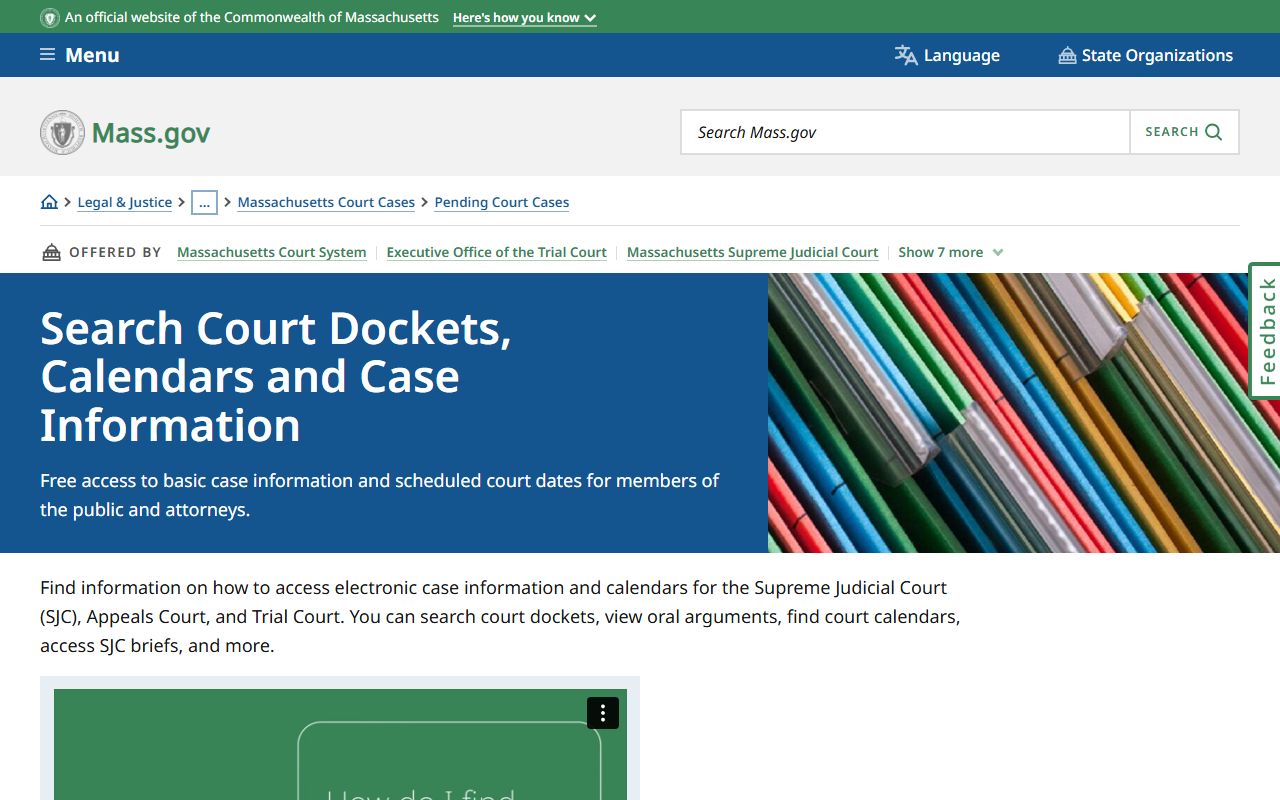
That gateway is the better starting point when the question is about charges or court dates rather than physical custody.
How Massachusetts Trial Court Records Are Organized
Massachusetts criminal cases are handled through the statewide Trial Court system, but the practical search often depends on the court department, county, judicial district, case type, and docket number. District Court, Boston Municipal Court, Superior Court, and other departments can appear in criminal or related matters depending on the case. A single arrest can therefore involve a county jail record and a separate court record in the court where the case was filed.
Mass.gov guidance in the research warns that online case access varies by department and case type. Many criminal cases require a docket-number search online. If a name search fails, use the arresting county, booking agency, court notices, bail paperwork, or sheriff records office to identify the correct court and docket number. When a case is impounded, sealed, juvenile, or otherwise confidential, public online access may be limited or unavailable.
How to Find Massachusetts Court Records After an Arrest
The statewide path starts with the Trial Court search gateway and the MassCourts eAccess portal. The court portal is for docket and case information, not jail custody. A user may need MassCourts for charges, a county sheriff for booking records, MA DOC/VINELink for state-prison custody, BOP for federal sentenced custody, and ICE ODLS for immigration detention.
- Open the Trial Court search guidance or MassCourts eAccess portal.
- Search by docket number when available, especially for criminal matters that may not be broadly name-searchable online.
- Read the case type, court department, charge list, events, disposition, and sentencing entries.
- Use the County Directory if you need the sheriff or county facility tied to a recent booking.
- If the sentence moved the person to state prison, use MA DOC and VINELink for custody status after sentencing.
MassCourts eAccess is the official electronic case-access portal identified in the Massachusetts research.
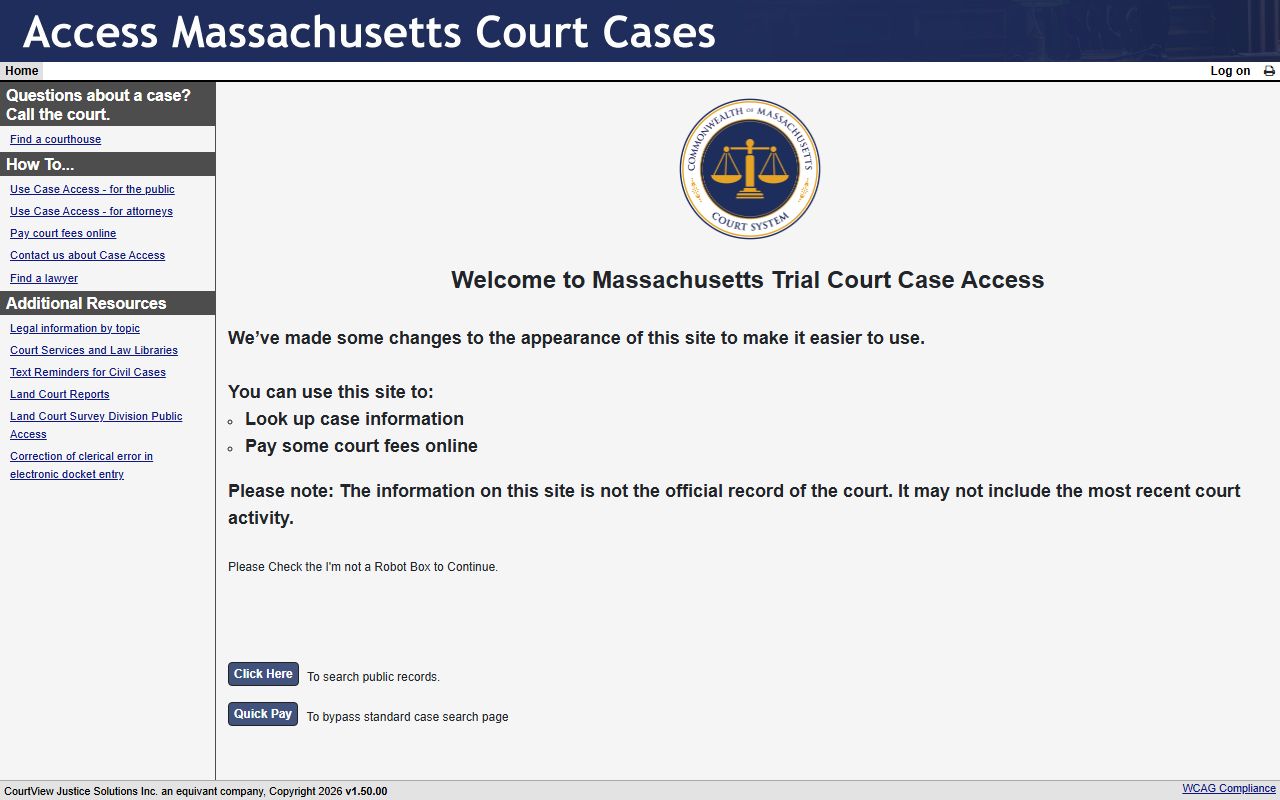
Use the portal to trace the court side of the case, then confirm custody through the agency that physically holds the person.
How Charges Get Filed After an Arrest: Complaint and Indictment
A Massachusetts arrest can begin with police allegations and booking paperwork, but the court record is built from formal filings and docket events. A complaint or indictment may state the charges that the court will track. The docket then records arraignment, bail decisions, hearings, motions, amendments, dispositions, sentencing, and later activity. The researched materials do not support treating the booking charge list as final.
| Record | Where It Usually Lives | What It Can Show |
|---|---|---|
| Booking record | County sheriff or police | Custody intake, facility, local identifiers, and initial charge information. |
| Complaint | Trial Court clerk | Filed charges that open or continue the criminal case. |
| Indictment | Superior Court record | Grand-jury charges in more serious cases. |
| Docket sheet | MassCourts or clerk | Case events, hearings, orders, dispositions, and sentencing entries. |
Charge Status in Massachusetts Court Records After an Arrest
Charge status can change throughout a case. A charge may be pending, amended, reduced, dismissed, disposed by plea, resolved after trial, or affected by a later order. Do not assume that a jail roster charge and a court disposition are the same thing. Use the docket to check the current court status and use the holding agency to check custody.
| Status | What It Means |
|---|---|
| Pending | The charge has not reached final disposition in the court record. |
| Amended or reduced | The filed charge changed from an earlier version or allegation. |
| Dismissed | The court record indicates the count did not proceed to conviction. |
| Disposed | The docket shows an outcome, which may include plea, trial result, dismissal, or another final event. |
Bail, Holds, and Release After an Arrest
A person may be released, held on bail, held on another warrant, moved to a county house of correction, transferred to MA DOC after sentencing, or held under a federal or immigration process. Court records can show bail orders and hearing events, but a docket alone may not prove the person’s current physical location. Release dates can also change because of credits, disciplinary effects, parole decisions, detainers, warrants, civil commitments, court orders, or calculation corrections.
| Custody Question | Best Massachusetts Channel |
|---|---|
| Is the person still in a county jail? | County sheriff roster, records office, or facility phone path. |
| Was the person sentenced to state prison? | MA DOC lookup page and VINELink. |
| Is there a federal sentence? | BOP inmate locator. |
| Is immigration detention involved? | ICE ODLS and the known ICE facility route. |
Charges vs. Convictions in Massachusetts Records
An arrest or charge is not a conviction. Court records after an arrest may show allegations, probable-cause events, amended counts, dismissals, pleas, verdicts, and sentencing entries. Jail records can show custody status and booking data, but they should not be used to make employment, tenant, credit, insurance, or other FCRA-regulated decisions through this site.
| Charge | Conviction | |
|---|---|---|
| Stage | Accusation or filed count | Final finding, plea, or verdict recorded by the court |
| Custody effect | May lead to bail, release, detention, or conditions | May lead to sentence, probation, house of correction, or MA DOC commitment |
| Where to verify | MassCourts or court clerk | MassCourts, clerk, sentencing record, and custody agency |
Sealed, Impounded, and Expunged Arrest Records in Massachusetts
Massachusetts public access is broad but not unlimited. The research identifies CORI limits, juvenile confidentiality, impoundment, sealed and expunged records, victim and witness privacy, active investigation, facility security, medical and mental-health privacy, legal-mail concerns, PREA confidentiality, personnel records, and federal privacy rules as possible limits. G.L. c. 6, section 167 is relevant to CORI definitions, and public access to court records can change when a record is sealed, impounded, expunged, or otherwise restricted by law or court order.
If a case does not appear online, the reason may be search method, docket-number requirements, court department limits, confidentiality, or a legal restriction.
Background Check Considerations
Massachusetts court records, inmate records, and custody locators can help a member of the public understand where a case stands. They are not a substitute for a compliant background-check process, legal advice, or an official certification from the court. Court charges and jail booking allegations are not convictions, and official agencies control their own records.
Important: This site is not a consumer reporting agency and must not be used for FCRA-regulated employment, tenant, credit, insurance, or eligibility decisions.
Restricted Court Records After an Arrest
Restricted records require careful handling. Juvenile matters, sealed cases, impounded filings, active-investigation material, victim-identifying information, medical or mental-health records, and certain CORI-related information may be withheld or redacted. For copies, contact the Trial Court clerk for court filings, the county sheriff for jail records, MA DOC for state-prison records, police for arrest reports, and the prosecutor for prosecution records when appropriate.
MA DOC's public-records page is the state-prison records channel, separate from the Trial Court and county sheriff systems.
Using the right custodian reduces delays and avoids sending a court-record request to a custody agency that does not hold the filing.
When Court Records Point to MA DOC, BOP, or ICE
A court disposition can show why the county roster no longer has the person. If the docket reflects a state-prison sentence, the next custody check is MA DOC and VINELink. If the case is federal and the person is designated to BOP custody, use the federal locator. If immigration detention is involved, use ICE ODLS. Plymouth County Correctional Facility is the current Massachusetts ICE detention facility identified in the official ICE source, but ICE custody is still searched through the ICE system rather than a normal criminal court docket.
The BOP inmate locator covers federal inmates and uses federal identifiers or name-search fields.
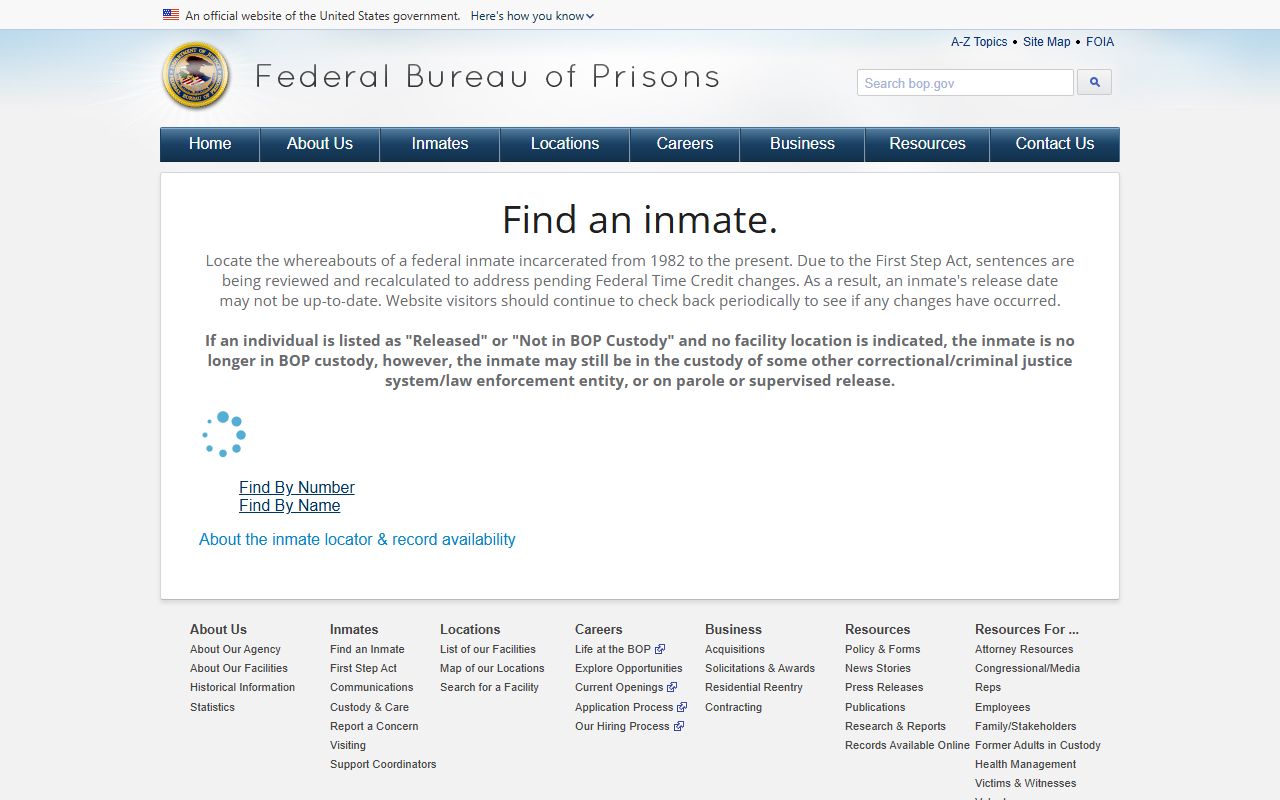
That federal path is separate from Massachusetts county jails, MA DOC, and MassCourts, even when a federal prisoner has Massachusetts ties.